[Photo via 699pic.com]
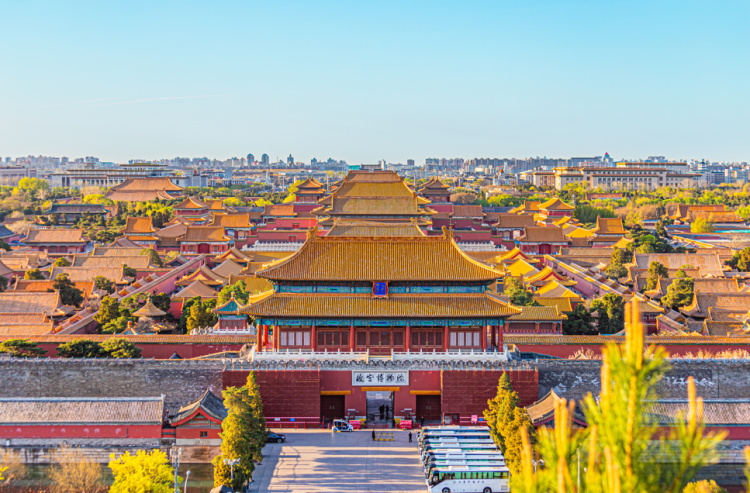
Stretching 7.8 kilometers, the Beijing Central Axis connects the core architectural landmarks and urban fabric of China's ancient capital. Carrying the Eastern philosophy of harmony between heaven and humanity, it represents the essence of Chinese spatial order and cultural spirit.
Today, artificial intelligence is breathing new life into this nearly 800-year-old urban axis, allowing history to transcend the limits of time and space and enter everyday life. In September 2024, the cinematic VR interactive exhibition "Look at The Axis of Heaven and Earth" officially opened in Beijing's Wangfujing. Through fully immersive 1:1 three-dimensional simulations of 15 iconic landmarks along the Central Axis, visitors can virtually explore the Forbidden City, the Bell and Drum Towers, and the Tian'anmen Gate Tower, forming emotional connections with Beijing's cultural heritage through the fusion of physical and virtual worlds. The project was selected as a 2025 Demonstration Case for Protecting and Promoting the Diversity of Cultural Expressions in the Digital Environment, highlighting Beijing's efforts to revitalize cultural heritage and safeguard cultural diversity through AI.
As both China's national cultural center and an international hub for scientific and technological innovation, Beijing is forging a unique path: using AI to preserve, revitalize, and innovate diverse cultural forms, allowing historical heritage and contemporary creativity to resonate together. In doing so, the city offers a replicable "Beijing solution" for protecting cultural diversity in the digital age.
Reviving Ancient Texts: AI Brings Silent Archives to Life
For years, woodblock prints and ancient books remained hidden away due to their fragility, high scholarly barriers, and limited accessibility. Today, AI is changing that—bringing historical documents out of archives and into public life.
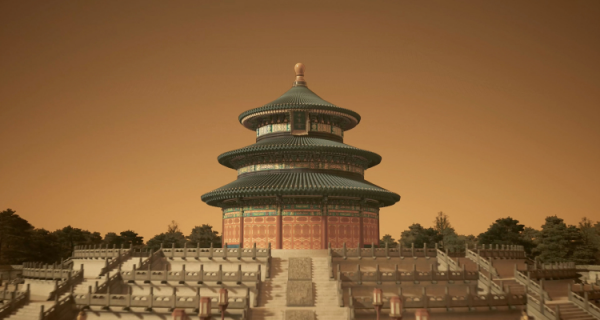
One notable example is "Ancient Capital Panorama", a digital immersive experience jointly developed by the Capital Library of China and CNPIEC UNTRO Technology Beijing Co., Ltd. Drawing from 198 rare prints and historical texts, including Hongxue Yinyuan Tu Ji (Illustrated Record of Hongxue Encounters), Wuyingdian Juzhenban Chengshi (Procedures of Movable-Type Printing at the Wuying Palace), and Tangtu Mingsheng Tuhui (Illustrated Gazetteer of Famous Sites in Tang Dynasty), the project combines panoramic video and glasses-free 3D technology. Guided by the imagery of the Beijing swift, it weaves together the city's urban structure, architectural aesthetics, and everyday life, allowing audiences to experience Beijing's cultural heritage immersively. This model of digital translation and immersive communication has become a valuable reference for public cultural institutions nationwide.
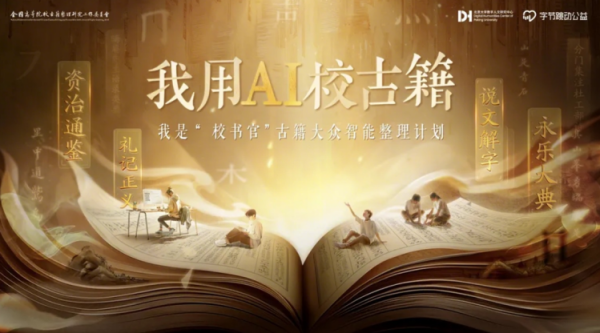
Similarly, ByteDance has launched major AI-driven initiatives to preserve ancient books. In collaboration with Peking University, ByteDance created the free online platform Shidian Ancient Books, which now hosts more than 57,000 ancient texts. AI-powered tools such as intelligent assistants, classical-modern Chinese comparison, and image-text alignment significantly lower reading barriers for the public.
The initiative "I Collate Ancient Books with AI – I am a Text Collator" has also attracted over 37,000 volunteers, collectively proofreading around 1.5 billion Chinese characters, transforming ordinary citizens into guardians of civilization. Meanwhile, younger audiences are being reached through documentaries and short dramas such as "Return to the Yongle Encyclopedia", allowing ancient texts to move from library shelves into digital public space.
Revitalizing Intangible Cultural Heritage: AI Gives Traditional Arts New Life
At the 2025 Beijing International Week of Intangible Cultural Heritage, the digital heritage ambassador "Feifei" served as a multilingual AI guide, providing narration, Q&A, and visitor assistance through natural multimodal interaction. Its popularity demonstrated how AI can help intangible cultural heritage break into younger and more trend-driven audiences.
This is a vivid example of how AI is helping solve long-standing challenges in heritage preservation, including generational gaps, weak communication channels, and limited innovation. Through AI, intangible cultural heritage is evolving from static preservation toward living revitalization.

In Beijing's historic Tianqiao Historic and Cultural District, even the thousand-year-old art of vocal mimicry has entered a new era of technological collaboration. Using high-fidelity audio recording systems, practitioners' sounds are being systematically archived and preserved, safeguarding disappearing natural and urban soundscapes. Young creators can then use AI-generated sound materials for secondary creation in performances, short videos, and new media, preserving authenticity while expanding the art form's contemporary relevance.
Similarly, the Taichi Cube Digital Cultural Space applies AI posture recognition and multimodal sensing technologies to create integrated experiences combining entertainment, health monitoring, exercise, and wellness. Taichi, traditionally taught through direct instruction, is becoming a measurable, interactive, and accessible digital wellness practice, attracting younger generations to engage with intangible cultural heritage.
Empowering Urban Space: AI Creates Immersive Cultural Experiences
As AI becomes increasingly integrated into urban environments, Beijing is reshaping traditional cultural spaces into immersive environments that combine historical depth, technological sophistication, and broad public accessibility.
Located in the historic Dashilar district, the Beijing Fun digital complex—Ruijing Space—is Beijing's first large-scale digital cultural complex. Integrating AI and metaverse technologies with century-old alleyway architecture, it features a 6,000-square-meter immersive experience zone that creates a full ecosystem of "digital empowerment–cultural experience–consumer transformation."
Inside the complex, AI digital guides equipped with voice interaction and 3D imaging technologies act as "tour guides in your pocket." The project also launched a "Digital Technology Art Program for All Ages," ensuring immersive experiences remain inclusive and accessible across generations.
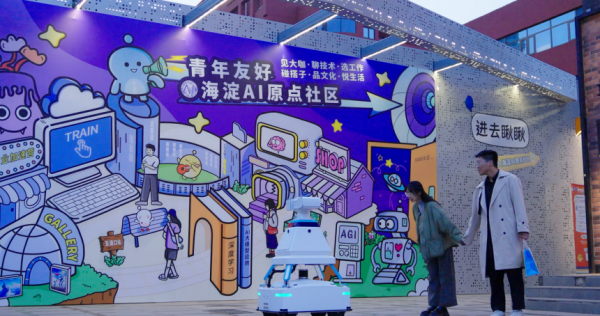
[Photo via Official WeChat account of "Wenming Haidian"]
AI-driven immersive experiences are also transforming exhibitions and public events. At the Fourth Beijing AI Industry Innovation and Development Conference, visitors explored interactive hutong experiences powered by AI video large models, alongside AI photography and smart kitchen demonstrations that brought a distinctly "Beijing-style" technological warmth.
Meanwhile, at the Beijing AI Genesis Community, the integration of "technology + everyday life" feels even more tangible. Visitors can encounter service robots, experience robot-made coffee and ice cream, or enjoy AI-assisted wellness services—bringing AI directly into daily urban culture.
Promoting Mutual Learning Among Civilizations: Beijing's AI Practices Go Global
Cultural diversity is a shared treasure of humanity, and digital technologies are opening entirely new possibilities for intercultural dialogue. Beijing's AI-powered cultural initiatives are increasingly becoming bridges connecting civilizations across borders.
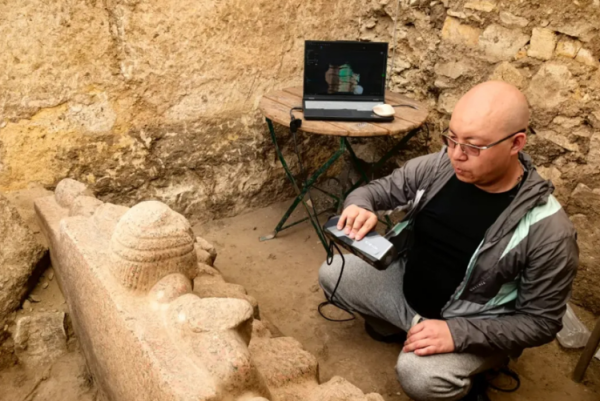
Digital technologies have played a key role in the project "Digital Technology Empowers China-Egypt Joint Archaeology" at the Saqqara Pyramid Complex (the core cemetery of the ancient Egyptian capital Memphis). High-precision 3D scanning and micro-trace imaging technologies were used to create holographic digital archives for thousands of ancient wooden coffins, while multilingual global databases allow scholars worldwide to access high-fidelity cultural heritage data regardless of location.
In 2025, Beijing's Xicheng District launched the world's first multilingual opera song generated by an AIGC multimodal large model, "Five Continents Sing Together, United by Opera". AI technologies intelligently adapted vocal tones and rhythms while preserving the original charm of Peking Opera, enabling global audiences to appreciate the beauty of Chinese opera without language barriers.
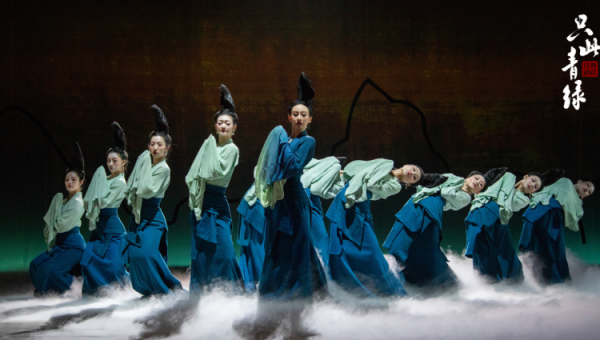
Meanwhile, the dance drama Poetic Dance—Only This Green and Blue— uses intelligent stage technologies to create immersive theatrical experiences that communicate the aesthetics of Chinese civilization. The digital project The God of Shaolin Kung Fu combines AIGC and motion-capture technologies to bring Shaolin Kung Fu to global audiences through digital platforms.
These AI practices emerging across Beijing are far more than displays of cutting-edge technology. They are cultural initiatives rooted in warmth, continuity, and responsibility—deeply aligned with the spirit of the UNESCO Convention on the Protection and Promotion of the Diversity of Cultural Expressions.
What AI illuminates is Beijing's enduring cultural heritage; what it protects is humanity's shared cultural diversity. In the digital era, Beijing—as a UNESCO Creative Cities Network "City of Design"—is embracing a more open, innovative, and inclusive approach to transforming cultural resources into digital experiences that are participatory, shareable, and globally accessible. Through this process, cultural diversity can be more effectively protected, communicated, and sustained in the digital age.