As artificial intelligence reshapes cultural creation, dissemination, and experience at an unprecedented pace, and as digital technologies become a key force in safeguarding cultural diversity, a global question has emerged: how can technology and culture coexist? How can innovation be balanced with ethics? And how can culture truly drive sustainable development?
As a leading institution in global cultural governance, UNESCO has long provided a clear direction. From the adoption of the Convention on the Protection and Promotion of the Diversity of Cultural Expressions in 2005, which established a global consensus, to the release of the Recommendation on the Ethics of Artificial Intelligence in 2021, which set ethical boundaries for technology, and to the launch of new regional cooperation initiatives for East and Southeast Asia, UNESCO is guiding the global integration of culture and technology toward a more responsible, inclusive, and sustainable future through a comprehensive and actionable policy framework.
Global Consensus: Culture at the Core, AI as a Key Variable
In 2005, UNESCO adopted the Convention on the Protection and Promotion of the Diversity of Cultural Expressions, elevating cultural diversity to a new level of international ethical commitment. Today, the convention has become a cornerstone of global cultural governance, with 161 Parties jointly advancing the shift from "static preservation" to "living transmission" of culture.
In recent years, this consensus has been further reinforced at the global policy level. The MONDIACULT 2025 reaffirmed that culture lies at the heart of global peace and sustainable development. It is not only an engine of economic growth but also a fundamental human right, playing a vital role in identity formation, social cohesion, and resilience. At the same time, artificial intelligence and digital transformation are becoming the most transformative forces shaping the cultural sector. With both opportunities and risks emerging, ensuring that technology empowers rather than undermines culture has become a shared global priority.
Authoritative Voices: UNESCO Defines Core Principles for "AI + Culture"
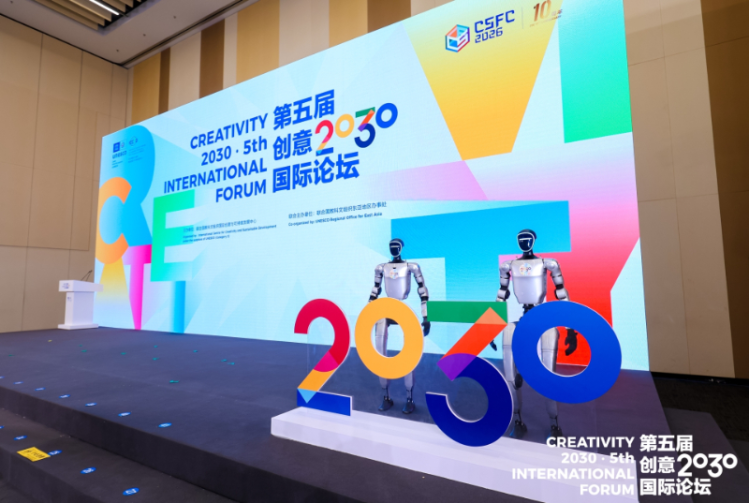
On March 27, the Creativity 2030 · 5th International Forum was held in Beijing, co-hosted by UNESCO's Regional Office for East Asia and the International Centre for Creativity and Sustainable Development under the auspices of UNESCO (ICCSD).
At the forum, Shahbaz Khan highlighted the current landscape of global cultural development: digital technologies are reshaping the ways culture is produced, created, disseminated, and experienced, opening up new possibilities for cultural participation, heritage preservation, and innovation in creative industries—while also placing greater responsibility on UNESCO.
He stressed that in the face of AI-driven transformation, a human-centered and inclusive approach must be upheld. Whether in the use of generative AI for cultural creation or the application of big data and immersive technologies in heritage protection, it is essential to adhere to principles of fairness and ethics, avoid bias and cultural stereotyping, and safeguard individual rights—ensuring that people from diverse cultural backgrounds and at different stages of development can equally benefit from technological advances.
Duong Bich Hanh, Chief of Culture at UNESCO's Regional Office for East Asia, further emphasized that "AI should serve culture." She noted that AI is not merely a technological issue, but also a profound cultural one. In the AI era, the world needs more adaptive governance models that prioritize cultural rights and integrity, safeguard cultural diversity in the face of algorithmic trends, and build a fair and sustainable cultural ecosystem.
Global Framework: Ethics and Rules to Safeguard the Cultural Future
UNESCO's efforts extend beyond concepts, forming a three-tiered policy system spanning the global, regional, and practical levels.
At the global level, UNESCO's Recommendation on the Ethics of Artificial Intelligence—the first international normative framework dedicated to AI ethics—sets out four core values: respect for human rights and dignity, environmental sustainability, diversity and inclusiveness, and the promotion of peaceful, just, and interconnected societies. It also defines ten guiding principles and 11 areas for action, including the need to ensure that AI contributes to solving environmental challenges without causing further harm.
This framework has become a key reference for exploring how AI can empower culture.
Regional Action: Launching the East–Southeast Asia Dialogue on Culture and Technology
In UNESCO's vision, the integration of culture and technology is not the endeavor of a single country, but a collaborative global effort shaped by regional characteristics.
During the Creativity 2030 · 5th International Forum, UNESCO's Regional Office for East Asia officially launched the "Technology and Culture Dialogue: AI and Culture in East Asia and Southeast Asia" initiative. Scheduled for implementation from 2026 to 2027, the initiative aims to build a cross-regional platform for exchange and cooperation, promoting the sound and in-depth integration of AI and culture.
Explaining the rationale behind this initiative, Duong Bich Hanh noted that the platform is designed to address fragmentation in the sector, amplify regional voices, and bridge development gaps. It will deepen cooperation in areas such as artistic creation, cultural rights, creative industries, heritage protection, and governance frameworks, fostering a shared vision for the cultural future in the AI era.
Shahbaz Khan also outlined practical directions for cooperation. China, he noted, has extensive experience in areas such as 3D technologies, image processing, and security applications, which can effectively promote cultural interaction. He highlighted the importance of AI across media creation processes and its deep integration with cultural creativity, emphasizing the value of mutual learning and exchange.
The establishment of this regional platform reflects UNESCO's unique role in global cultural governance—not only as a standard-setter, but also as a knowledge disseminator, integrator of best practices, and capacity builder.
Practice-Oriented Approach: Turning Policy into Action Through Case Studies
The vitality of policy lies in its implementation. Beyond macro-level frameworks and regional initiatives, UNESCO places strong emphasis on practical exploration, using case studies as a key tool to test and refine policies.
At the forum, the 2025 Typical Cases on Protecting and Promoting the Diversity of Cultural Expression in the Digital Environment were officially released. Forty selected cases—aligned with the United Nations 2030 Agenda for Sustainable Development—stood out, covering diverse areas such as immersive performances, heritage digitization, and innovation in intangible cultural heritage transmission.
These cases demonstrate that digital technologies can effectively revitalize cultural heritage and expand the boundaries of cultural dissemination; that AIGC, 3D technologies, and immersive interaction are becoming mainstream tools for cultural innovation; and that the integration of culture and technology is increasingly aligned with sustainable development goals in education, urban development, and environmental protection. Cross-sectoral and cross-border collaboration is also emerging as a new norm.
The significance of these cases lies not only in showcasing achievements, but also in providing replicable and scalable models for policymakers, cultural institutions, and creators worldwide—ensuring that the benefits of cultural and technological integration are widely shared.
From global ethical frameworks to regional cooperation platforms and on-the-ground practices, UNESCO is advancing a systematic, multi-level, and actionable approach to integrating AI and culture.
Looking ahead, with the continued implementation of the Recommendation on the Ethics of Artificial Intelligence, the full rollout of the East–Southeast Asia dialogue, and the deepening of global cultural governance cooperation, technology is set to become a true guardian of cultural diversity and a driver of sustainable development.
A more diverse, inclusive, and vibrant global cultural ecosystem is on the horizon.